
William Boyd's Armadillo café
A vivid scene in his 1998 novel reflects how the capital has changed yet stayed the same

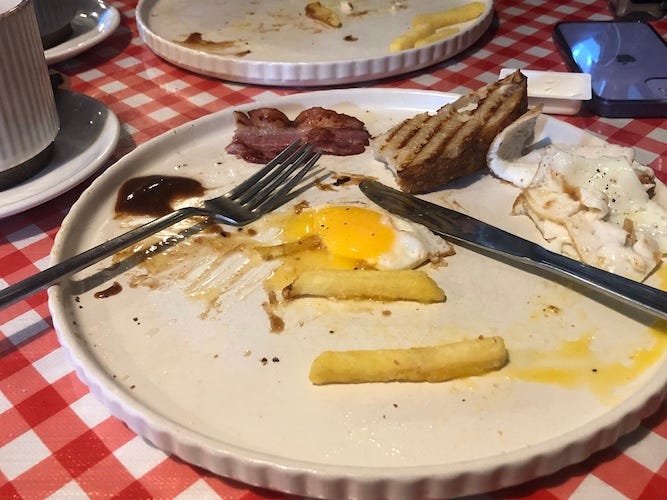
I’m reading Armadillo by William Boyd, one of the many acclaimed novelists I’ve spent decades not quite getting round to. When I started the book I had no idea it was set in London, and this, of course, has helped me warm to it. At the start of Chapter 5 there is a vivid description of the lead character, Lorimer Black, having breakfast at the made-up Café Matisse near his flat in Pimlico.
“He had been coming here for four years, regularly, and had yet to receive even a nod of welcome from the staff. Mind you, he had outlasted them all: the turnover of staff at the Matisse was extraordinary. He saw that the rangy South African girl was still here and the lugubrious Romanian too. He wondered vaguely if the tiny Portuguese one had left, the one who flirted with the bikers, wealthy, middle-aged men, paunchy in their leathers, who descended in a group at pre-arranged times of the week to drink coffee and stare lovingly at their immaculate Harleys, all spangling chrome, parked up on the pavement in full view.”
I admire how the café’s atmosphere has been captured, the insight it gives into Black’s bachelor life – the monitoring and assessing of the waitresses – and, at this point in the chapter, the scene’s familiarity. It doesn’t feel dated even though, given that the book was published in 1998, it might be expected to be showing its age. And then it does:
“Everyone smoked in the Matisse, apart from him; it almost seemed to be a condition of entry. The counter staff and the waitresses smoked during their breaks and every customer, young and old, male or female, fervently followed suit…”
The ban on smoking in enclosed public spaces began in England in 2007, and clearly would have had quite an impact on the vibe of the Matisse. Through the fug, Boyd sketches Black’s fellow customers.
“He looked around him now at the types scattered round the around the big gloomy rectangular room. A middle-aged couple – style: Eastern European intellectual – the man looking uncannily like Bertolt Brecht, both bespectacled, both in drab zip-up waterproof jackets. A table of four consumptive hippies, three men with lank hair and poor beards and a girl (rolling her own), bead-swagged with a flower tattooed on her throat. In one of the booths down the side was the obligatory lost-waif couple, two chalk-faced girls, black-clad, tlaking worriedly in furious whispers – too young, in trouble, pimp-fodder.”
A man puffing on a little pipe is likened to a member of the international Brigade. Two tall women, described as “breastless” and “hipless” with “swan necks and tiny heads”, are assumed by our observer-protagonist to be models – “there must be an agency nearby”. Boyd continues:
“All human life ventured into the smoky interior of the Matisse at some stage; if you sat long enough you would see everyone, every prototype the human species had to offer, every product of the gene pool, rich or poor, blessed or afflicted – which was the key to the place’s strange and enduring allure.”
Sounds a lot like London.
John Vane’s London novel Frightgeist in available here and only here. Read more about Armadillo here. Could the Matisse Café be inspired by the famous Regency?
I’ve been such a huge fan of William Boyd for years, but here you’ve encapsulated two other loves I’d not immediately associated with him: London (very ‘Any Human Heart’) and Matisse!
Cafe near Pimlico - wonder if he was inspired by the insitution that was the Regency Cafe, though the service was impeccable? Good to hear someone has reopened it.